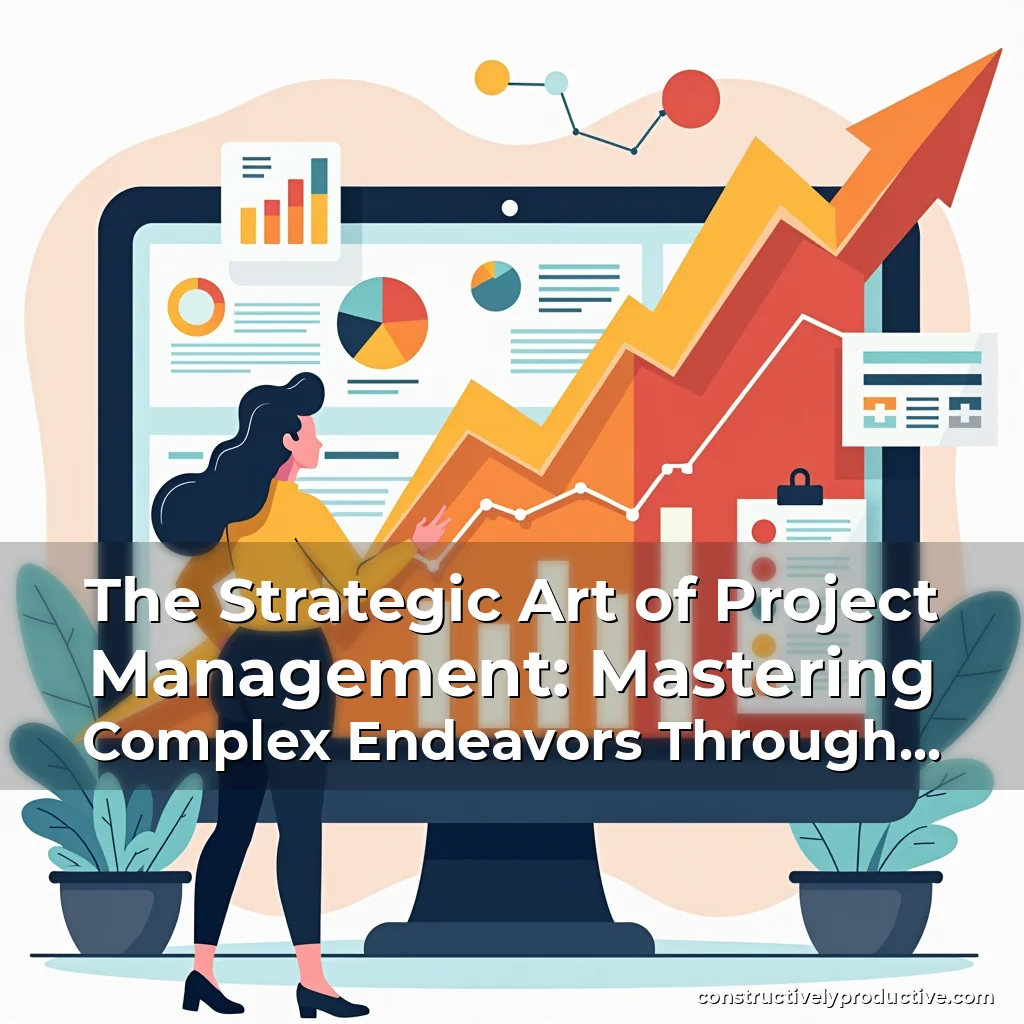
The Strategic Art of Project Management: Mastering Complex Endeavors Through Discipline and Vision
The Strategic Art of Project Management: Mastering Complex Endeavors Through Discipline and Vision
In an era where innovation moves at lightning speed and expectations are ever-rising, effective project management has become the backbone of successful organizations across industries. From tech startups launching groundbreaking apps to construction firms erecting skyscrapers, the ability to manage projects efficiently is what separates thriving enterprises from those that struggle.
This guide delves deep into the world of strategic project management, exploring how disciplined approaches can transform chaotic processes into structured successes. We’ll uncover techniques that enable teams to navigate complexity while maintaining clarity of purpose through every phase of execution.
Decoding the Core Principles of Effective Project Management
At its essence, project management involves orchestrating resources, timelines, and people toward achieving defined objectives within constraints. This requires a blend of technical expertise and interpersonal skills to ensure alignment between organizational goals and day-to-day operations.
The PMBOK Guide identifies five process groups that form the foundation of any robust methodology: initiating, planning, executing, monitoring & controlling, and closing. These stages provide structure without stifling flexibility, allowing managers to adapt as circumstances evolve during implementation.
- Initiating: Establishes clear project scope by defining deliverables, stakeholders, and success metrics before committing significant resources.
- Closing: Ensures proper documentation, knowledge transfer, and stakeholder satisfaction after completion of all planned activities.
While these phases appear linear, they often overlap in practice. Agile methodologies embrace iterative cycles rather than rigid sequencing, emphasizing continuous improvement over fixed plans. However, both traditional waterfall models and modern agile frameworks share commonalities in their pursuit of predictable outcomes.
Mastery of core principles enables professionals to identify potential roadblocks early and implement preventive measures proactively. It also empowers them to make data-driven decisions when faced with unexpected challenges mid-project lifecycle.
Navigating the Modern Landscape of Project Leadership
Project leadership extends beyond mere task delegation; it encompasses inspiring teams, resolving conflicts, and fostering collaboration among diverse stakeholders. A leader’s influence determines not only whether a project meets deadlines but also how well team members grow professionally through the experience.
Evidence suggests that high-performing project leaders spend approximately 60% of their time communicating effectively with various audiences. This includes regular updates for executives, clarifying requirements for clients, and providing motivation for frontline workers engaged in daily tasks.
Emotional intelligence plays a crucial role in managing cross-functional teams comprising individuals with different skill sets, personalities, and priorities. Leaders who demonstrate empathy and active listening create environments where creativity flourishes and problems get resolved quickly.
Successful project managers understand that authority comes with responsibility – they must balance assertiveness with approachability while upholding accountability standards across all levels of involvement.
Building Blocks of Successful Projects: Planning and Execution
A meticulously crafted plan serves as the roadmap guiding teams from concept to realization. It outlines key milestones, resource allocation strategies, risk mitigation tactics, and quality assurance protocols essential for delivering value consistently.
Tools like Gantt charts help visualize dependencies between tasks, ensuring everyone understands which activities need completion before others can begin. Critical Path Method calculations further enhance scheduling accuracy by identifying longest sequences affecting overall timeline duration.
Risk registers document identified threats along with their probability scores and impact assessments. Regularly updating these records allows proactive intervention instead of reactive crisis management when issues arise unexpectedly.
Execution phase demands rigorous oversight to maintain adherence to established parameters. Daily stand-ups facilitate quick problem-solving sessions whereas weekly reviews assess progress against benchmarks set during initial planning stages.
Leveraging Technology for Enhanced Productivity
Digital transformation has revolutionized project management practices by offering real-time visibility into workflows, automated reporting capabilities, and collaborative platforms connecting geographically dispersed teams seamlessly.
Cloud-based solutions such as Asana, Trello, and Microsoft Teams enable seamless coordination regardless of physical location. Their integration features allow synchronization between task tracking systems and communication channels used for client interactions.
Artificial Intelligence applications now assist with predictive analytics, helping anticipate delays based on historical performance patterns and current workload indicators. Machine learning algorithms optimize resource distribution dynamically according to changing conditions.
Virtual reality tools support immersive walkthroughs of proposed designs prior to actual construction commencement, reducing costly revisions later in development phases. Augmented reality overlays provide contextual information during field inspections enhancing decision-making precision.
Implementing enterprise-level software suites offers centralized repositories containing all relevant documents including contracts, specifications sheets, change orders, and compliance certifications required for audit trails and regulatory purposes.
Fostering Collaboration Across Diverse Stakeholders
Projects rarely succeed in isolation; they require harmonious cooperation between internal departments, external vendors, end-users, and governing bodies invested in final output quality. Establishing open lines of communication ensures all voices contribute meaningfully towards shared objectives.
Stakeholder mapping exercises help prioritize engagement efforts based on level of interest and influence each party holds regarding project outcomes. Tailoring messages appropriately increases chances of securing necessary approvals or commitments promptly.
Regular feedback loops involving impacted parties prevent misalignments that could lead to rework or dissatisfaction upon delivery. Incorporating user testing phases early helps validate assumptions made during design stages.
Conflict resolution mechanisms should be clearly articulated upfront so disagreements don’t derail momentum when they inevitably occur. Mediation procedures and escalation paths give disputants confidence knowing there exists formal avenues for addressing concerns fairly.
Measuring Success: KPIs and Continuous Improvement
Quantifiable metrics serve as compass points indicating whether initiatives stay aligned with intended trajectories. Selecting appropriate Key Performance Indicators (KPIs) depends heavily on nature of work being undertaken though several universal benchmarks apply broadly.
On-time delivery rates measure percentage of completed tasks meeting scheduled deadlines versus those experiencing delays. Cost variance analysis compares budgeted amounts against actual expenditures revealing areas requiring tighter control or unforeseen expenses impacting profitability margins.
Schedule performance index quantifies efficiency relative to original estimates using earned value management principles. Higher SPI values indicate better utilization of allocated timeframe compared to baseline projections.
User satisfaction surveys gauge perceived value delivered against stated expectations forming critical input for post-mortems aimed at refining future undertakings. Net Promoter Scores (NPS) offer quick snapshots capturing sentiment about overall experiences encountered throughout project lifecycles.
Data visualization dashboards consolidate disparate sources making complex information digestible for decision-makers needing timely insights without getting lost in minutiae.
Cultivating Resilience in Dynamic Environments
Uncertainty defines contemporary business landscapes necessitating adaptive mindsets capable of navigating disruptions gracefully. Developing contingency plans prepares teams for worst-case scenarios enabling swift responses minimizing damage inflicted by unavoidable setbacks.
Budget buffers account for unforeseeable events ranging from supply chain interruptions to sudden changes in market demand. Scenario modeling exercises simulate alternative realities helping identify vulnerabilities ahead of time so countermeasures remain viable options when crises strike.
Cross-training programs build institutional knowledge reducing dependency on individual contributors whose absence might otherwise stall progress significantly. Shared ownership mentality encourages collective problem-solving rather than placing undue pressure solely onto designated experts.
Psychological safety fosters environments where employees feel comfortable voicing concerns without fear of reprisal promoting transparency vital for detecting emerging risks early enough to address them constructively.
Agile retrospectives conducted regularly reinforce learning culture by examining past performances objectively seeking improvements applicable going forward even amid evolving circumstances.
Conclusion
Mastering project management requires embracing both artistry and science inherent in orchestrating multifaceted endeavors successfully. By understanding fundamental principles, leveraging technology wisely, cultivating strong leadership qualities, and continuously striving for enhancement, practitioners elevate themselves above mere coordinators becoming true architects of achievement.
As you embark on your journey toward professional excellence in this domain remember – every great project begins with vision yet culminates through meticulous execution grounded firmly in sound management practices tailored specifically to meet unique needs arising naturally from particular situations confronting us all everyday.

news is a contributor at ConstructivelyProductive. We are committed to providing well-researched, accurate, and valuable content to our readers.
You May Also Like
Try Our Productivity Calculators
Optimize your time and achieve your goals with our free tools
Explore All Tools