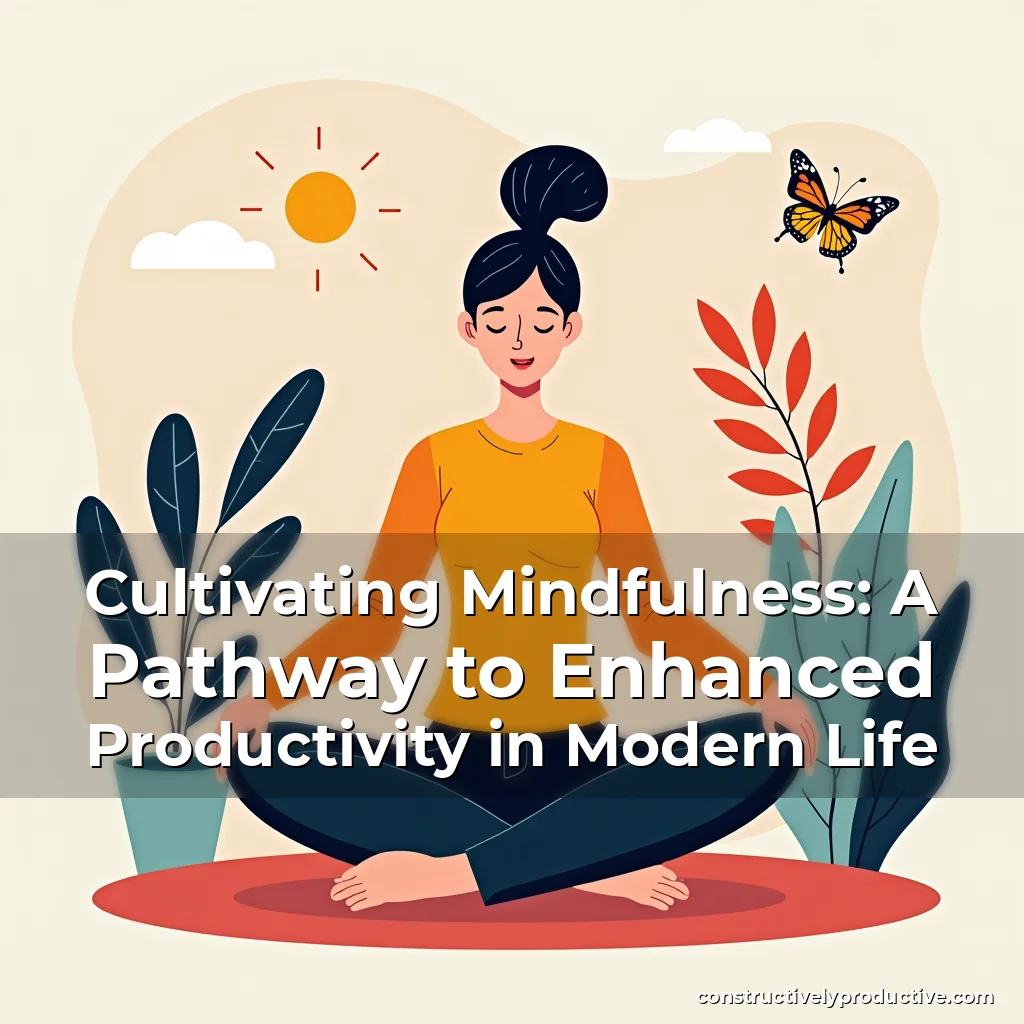
Cultivating Mindfulness: A Pathway to Enhanced Productivity in Modern Life
The Science Behind Mindfulness and Its Impact on Focus
Mindfulness isn’t just a buzzword; it’s rooted in neuroscience. Studies show that regular mindfulness meditation alters brain structures associated with attention, emotional regulation, and self-awareness. For instance, the prefrontal cortex, responsible for decision-making and concentration, becomes thicker through consistent practice.
Furthermore, mindfulness reduces activity in the default mode network—a mental state linked to mind-wandering and rumination—which often hijacks our productivity. By training the mind to stay anchored in the present moment, we minimize cognitive overload and enhance task efficiency.
- Improved Attention Span: Mindfulness strengthens neural pathways that help filter out distractions, allowing deeper engagement with tasks.
- Reduced Stress Hormones: Practices like deep breathing lower cortisol levels, which in turn prevents burnout and maintains cognitive performance.
How Mindfulness Boosts Cognitive Performance
Cognitive performance isn’t just about speed—it’s also about quality. Mindful individuals tend to process information more deeply, leading to better problem-solving and innovative thinking. This is because mindfulness encourages non-judgmental awareness, freeing the mind from habitual patterns that stifle creativity.
Research from Harvard University found that participants who practiced mindfulness showed increased gray matter density in regions tied to learning and memory. These changes weren’t just temporary; they persisted over time, suggesting lasting neurological benefits.
Practical Applications in Professional Settings
In corporate environments, companies like Google and Apple have integrated mindfulness programs into their cultures. Employees report fewer errors, faster task completion, and improved collaboration after participating in structured mindfulness sessions.
Data from a 2022 study published in *Mindfulness Journal* revealed that teams practicing group mindful reflection experienced a 28% increase in project efficiency compared to those without such interventions. This underscores the value of collective mindfulness in fostering productive workplaces.
Techniques to Integrate Mindfulness Into Your Daily Routine
You don’t need hours to reap the benefits of mindfulness. Simple exercises like mindful breathing, body scans, or even pausing before responding can anchor you in the present. Begin by setting aside five minutes each morning to observe your breath without judgment.
Another effective technique is the “five senses” exercise: take a moment to notice what you see, hear, feel, taste, and smell. This resets your brain’s focus and interrupts automatic reactions to stressors or distractions.
Leveraging Technology for Mindfulness Practice
Digital tools now make mindfulness accessible to everyone. Apps like Headspace, Calm, and Insight Timer offer guided meditations tailored to different goals, whether reducing anxiety or enhancing focus. Some platforms even integrate with calendars to remind users to pause during busy periods.
Voice-assisted devices, such as Amazon Alexa or Google Assistant, provide quick access to mindfulness prompts. You can ask for a two-minute breathing session or a grounding exercise mid-task, making consistency easier to maintain.
Pitfalls to Avoid When Starting Out
Newcomers to mindfulness might struggle with impatience, expecting immediate results. It’s crucial to remember that progress takes time. One common mistake is comparing yourself to others or dismissing small wins, like noticing when your mind wanders instead of getting frustrated by it.
Overloading your schedule with too many practices at once can lead to burnout. Instead, pick one or two techniques to master Consistency matters far more than perfection.
Mindfulness and Time Management: A Synergistic Relationship
Time management frameworks like the Eisenhower Matrix or Pomodoro Technique gain power when paired with mindfulness. Being aware of how you spend your time allows you to prioritize effectively, eliminating procrastination driven by overwhelm or fear of failure.
A key insight here is recognizing when multitasking undermines productivity. Mindfulness teaches us to focus on one task at a time, improving both speed and accuracy. This shift aligns with findings that single-tasking increases retention rates by up to 40%, according to a Stanford study.
Navigating Distractions Through Mindfulness Awareness
Distractions come in many forms—from social media notifications to internal chatter. Mindfulness trains you to acknowledge these interruptions without reacting impulsively. For example, if your phone rings, you can choose to respond later rather than letting the notification disrupt your flow.
One powerful method is labeling intrusive thoughts (“This is just my mind wandering”) to disengage emotionally. This creates distance between you and the distraction, restoring focus quickly without losing momentum.
Creativity and Innovation Through Mindful Observation
Creative thinkers often credit mindfulness with helping them generate novel ideas. By observing surroundings with fresh eyes—an unopened bottle of water, the texture of fabric—you tap into unconscious associations that spark innovation.
A 2021 experiment demonstrated that artists who engaged in mindful sketching produced more original works than those who sketched mechanically. The act of slowing down and truly seeing allowed deeper exploration of possibilities.
Mindfulness for Students: Enhancing Academic Performance
Students juggling coursework, extracurriculars, and part-time jobs face immense pressure. Incorporating mindfulness helps manage stress, improves sleep quality, and enhances concentration during study sessions. Universities worldwide now offer workshops to teach these skills.
Taking ten minutes before exams to visualize success or practice gratitude rewires the brain toward positive outcomes. Such rituals reduce test-day anxiety and promote calm, focused thinking under pressure.
Building Resilience: How Mindfulness Supports Long-Term Productivity
Resilience isn’t innate; it’s developed through intentional practices. Mindfulness builds psychological resilience by teaching acceptance of uncertainty and equanimity in challenging situations. This mindset enables sustained effort despite setbacks.
When faced with criticism or failure, a mindful person observes emotions without identifying with them. This detachment allows for objective analysis and constructive action, turning obstacles into growth opportunities.
Case Study: A Manager’s Journey to Mindful Leadership
Jane, a senior manager at a tech firm, struggled with constant meetings and reactive decisions. After attending a mindfulness retreat, she began dedicating fifteen minutes daily to silent reflection. Within weeks, her team noticed improvements in communication and morale.
Jane implemented weekly “check-in circles,” where employees shared reflections on priorities and stress points. This practice reduced misunderstandings and fostered trust, proving that mindful leadership inspires productivity across organizational levels.
Measuring Progress: Tracking Mindfulness Benefits Over Time
Tracking your journey helps reinforce commitment. Journal entries detailing moments of presence, decreased irritability, or clearer thinking serve as tangible evidence of progress. Many apps now include metrics showing trends in mood and focus over days or weeks.
Social support amplifies these effects. Sharing experiences with friends or joining online communities provides accountability and motivation. Celebrate milestones, no matter how small—they validate your efforts and sustain momentum.
Conclusion
Mindfulness isn’t a luxury but a foundational skill for modern life. From sharpening focus to building resilience, its applications span every aspect of productivity, creativity, and well-being. The journey requires patience, but the rewards are profound and enduring.
To begin, commit to one simple habit—whether it’s mindful breathing during commutes or reflecting before bedtime. With persistence, you’ll discover how presence transforms not only your output but also your relationship with work itself.

news is a contributor at ConstructivelyProductive. We are committed to providing well-researched, accurate, and valuable content to our readers.
You May Also Like
Try Our Productivity Calculators
Optimize your time and achieve your goals with our free tools
Explore All ToolsRelated Articles
The Mindful Productivity Revolution: How Presence Enhances Efficiency and Fulfillment at Work In an era...
Read More